

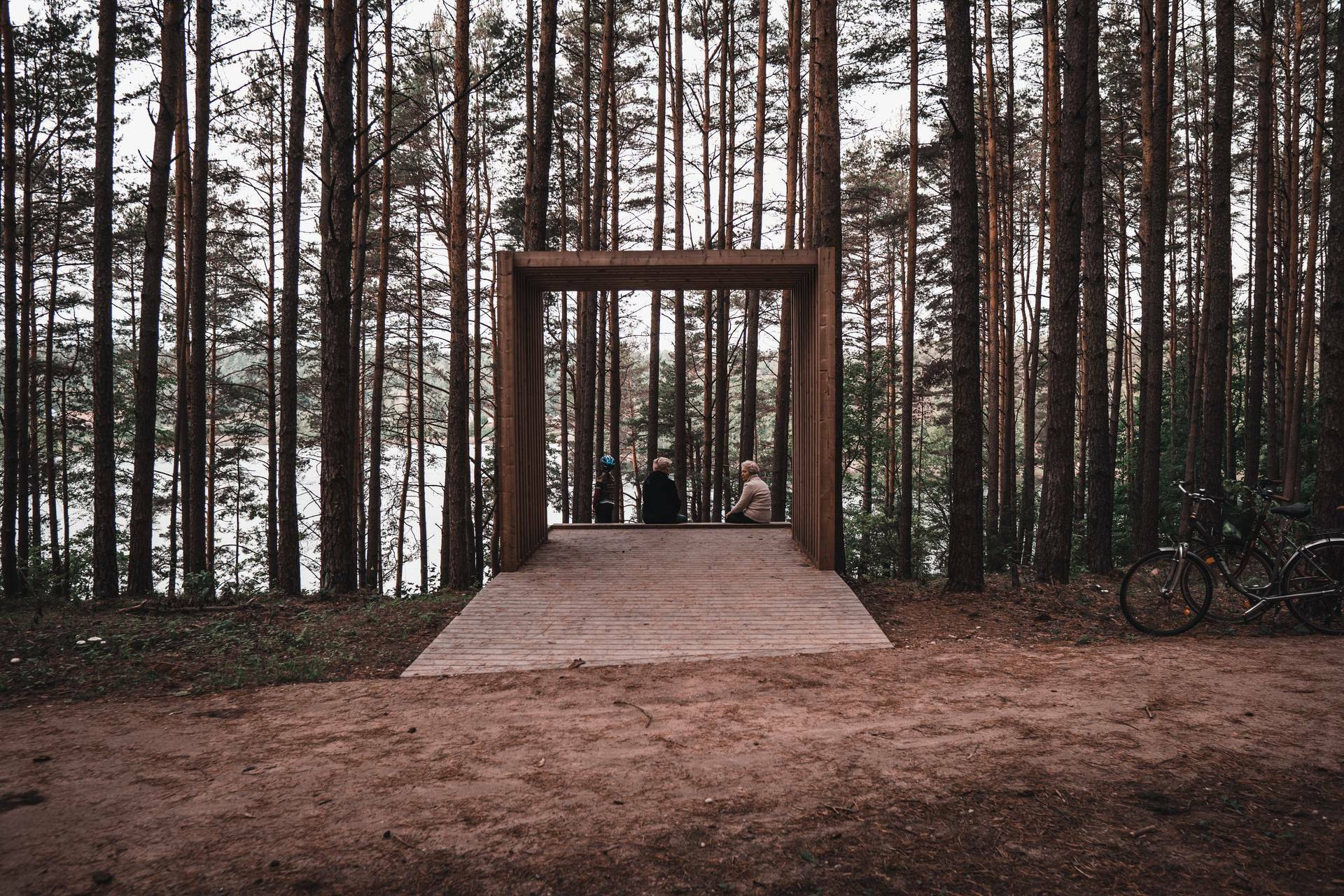
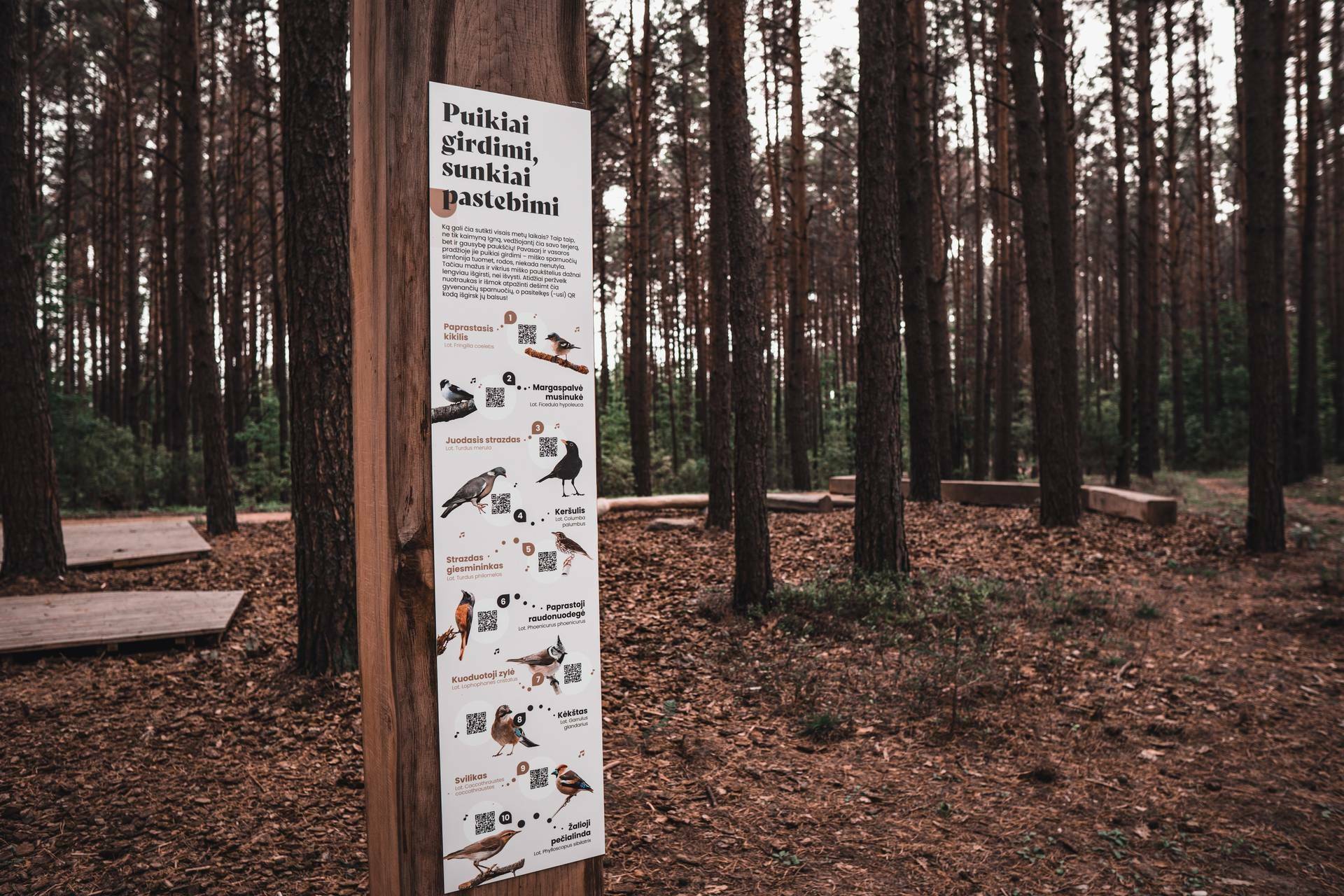
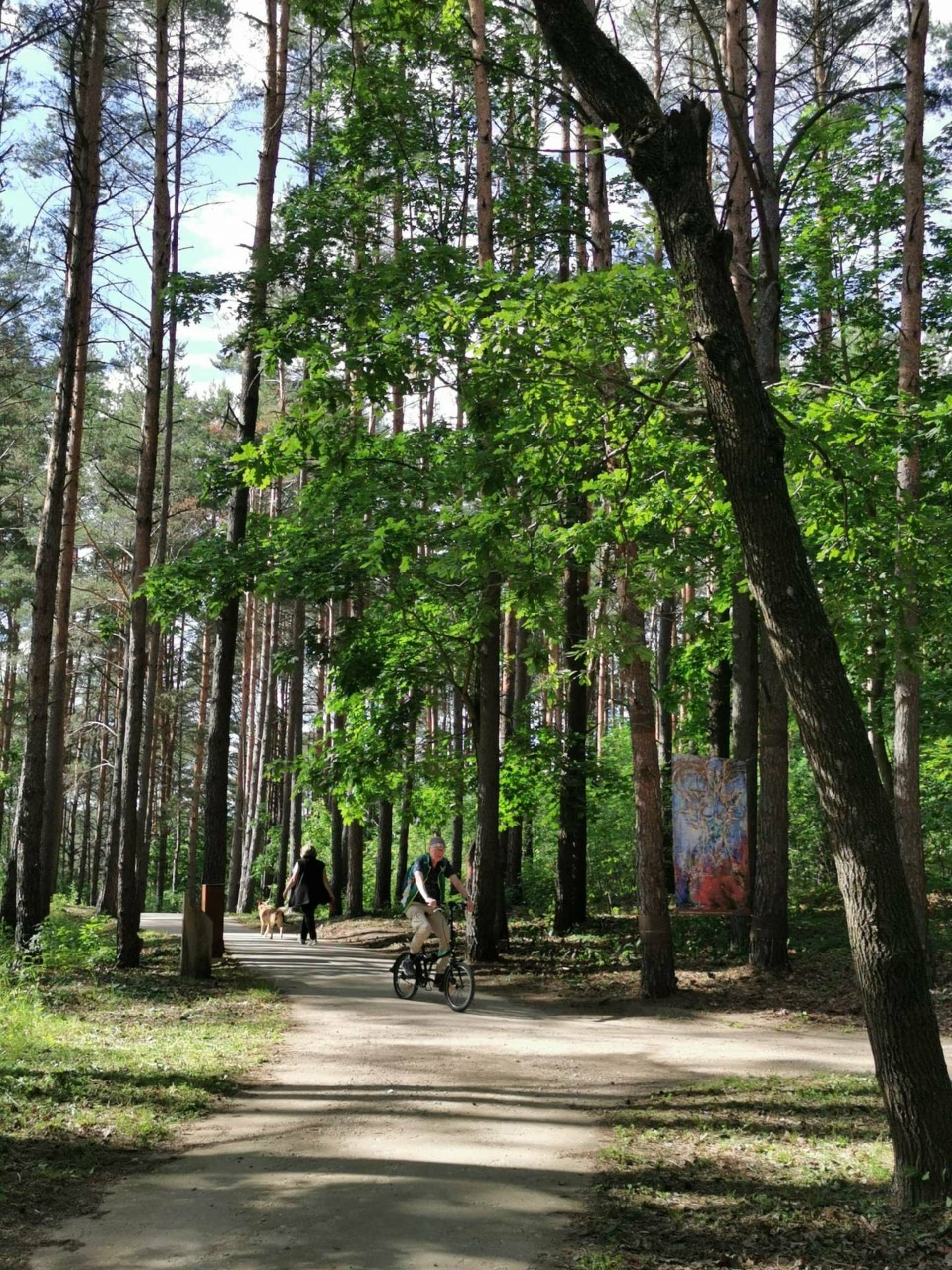
A forest park created in a favorite walking spot for Ignalina residents – a beautiful pine forest by Lake Palaukinis – also invites you to explore. Information stands built next to the park’s paths, recreation areas and terraces tell about the rich natural diversity of this forest, the rare and useful plants and bird species that grow there.
When establishing the park and managing the green space, the aim was to increase the attractiveness of the territory, create better conditions for recreation, leisure, and knowledge, while maintaining the least possible intervention in nature, not to damage the natural development of life in this place, and not to disrupt the development of biodiversity. As specialists say, processes invisible to us, vitally important not only for the forest itself, but also for the city and people, take place in the forests.
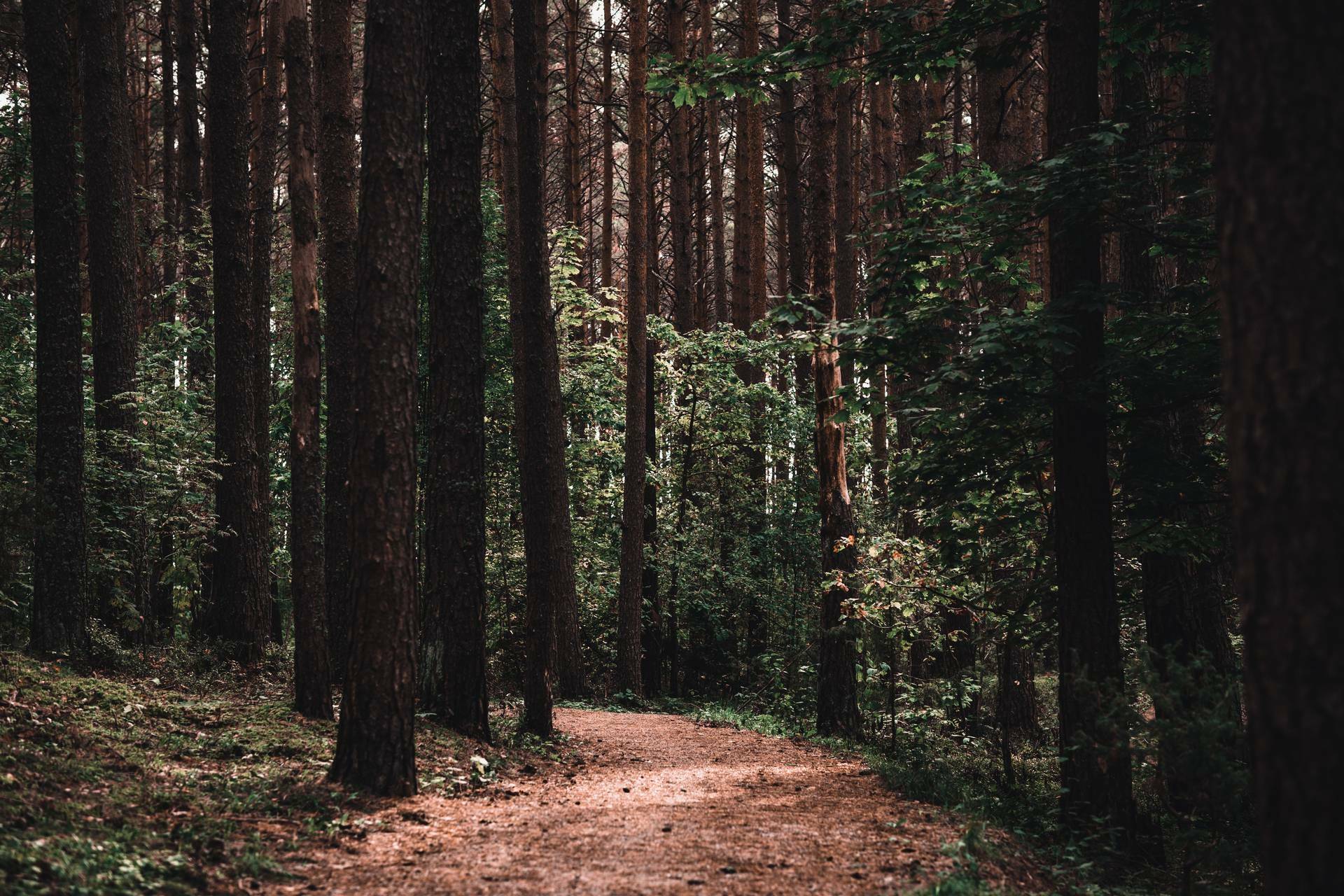
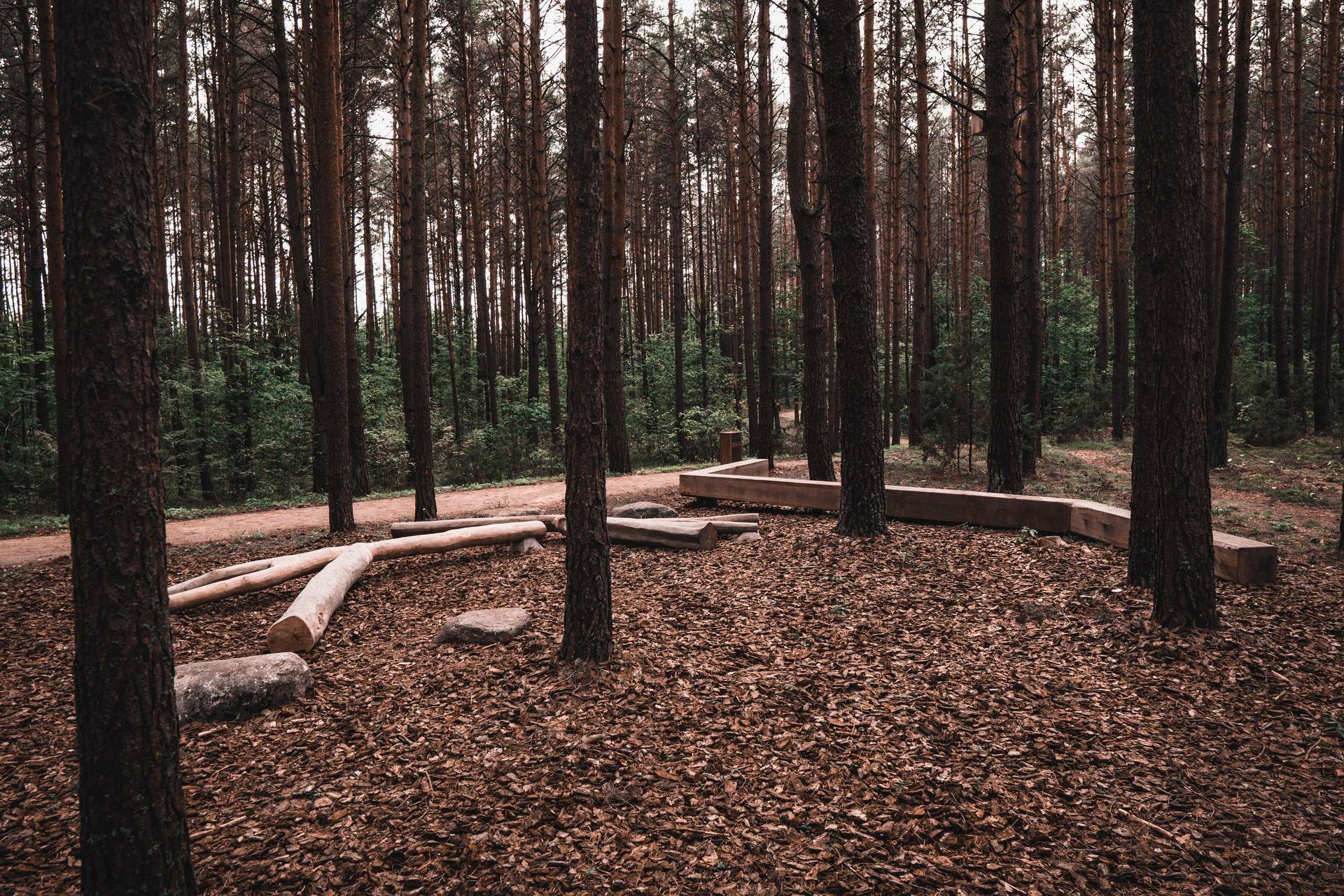
Only natural materials were used in the creation of the Ignalina Forest Park. Most of the paths are paved with a hardened surface, but there is also a path filled with tree bark. It leads through a pile of logs and branches. Dead trees are food, homes and hiding places for many forest organisms. In this forest, under the bark of drying pine trees, live rare, protected larvae of a true relic of Lithuanian forests - Schneider's worm beetle.
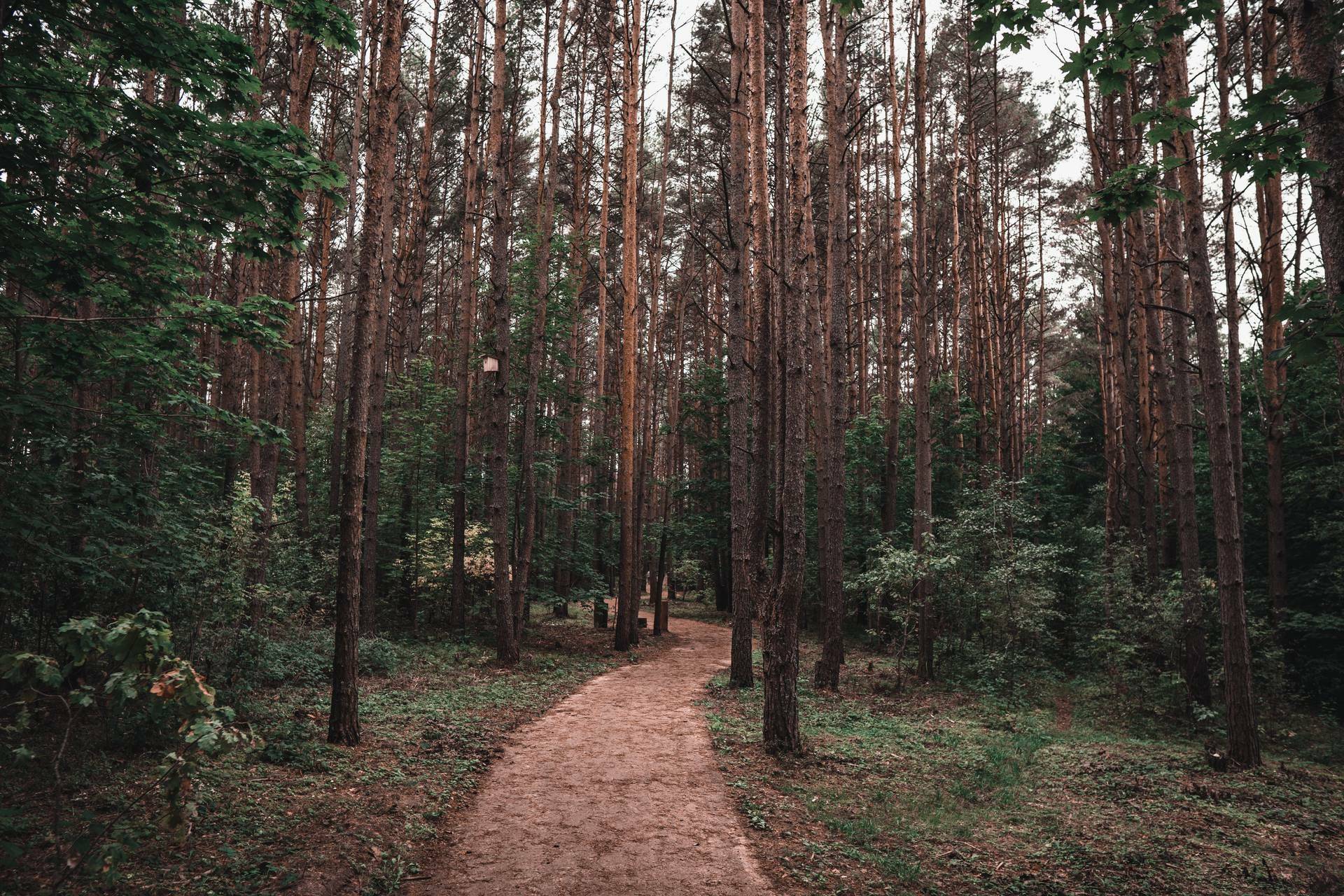
Studies have shown that 25 species of land and water birds live in this area. 17 birdhouses have been built in the trees for birds. In the forest you can see and hear the finch, the pied flycatcher, the song thrush, the black tit, etc. Swans, mallards, whooper ducks, long-eared grebes, and the wagtail sway on the waves of the lake.
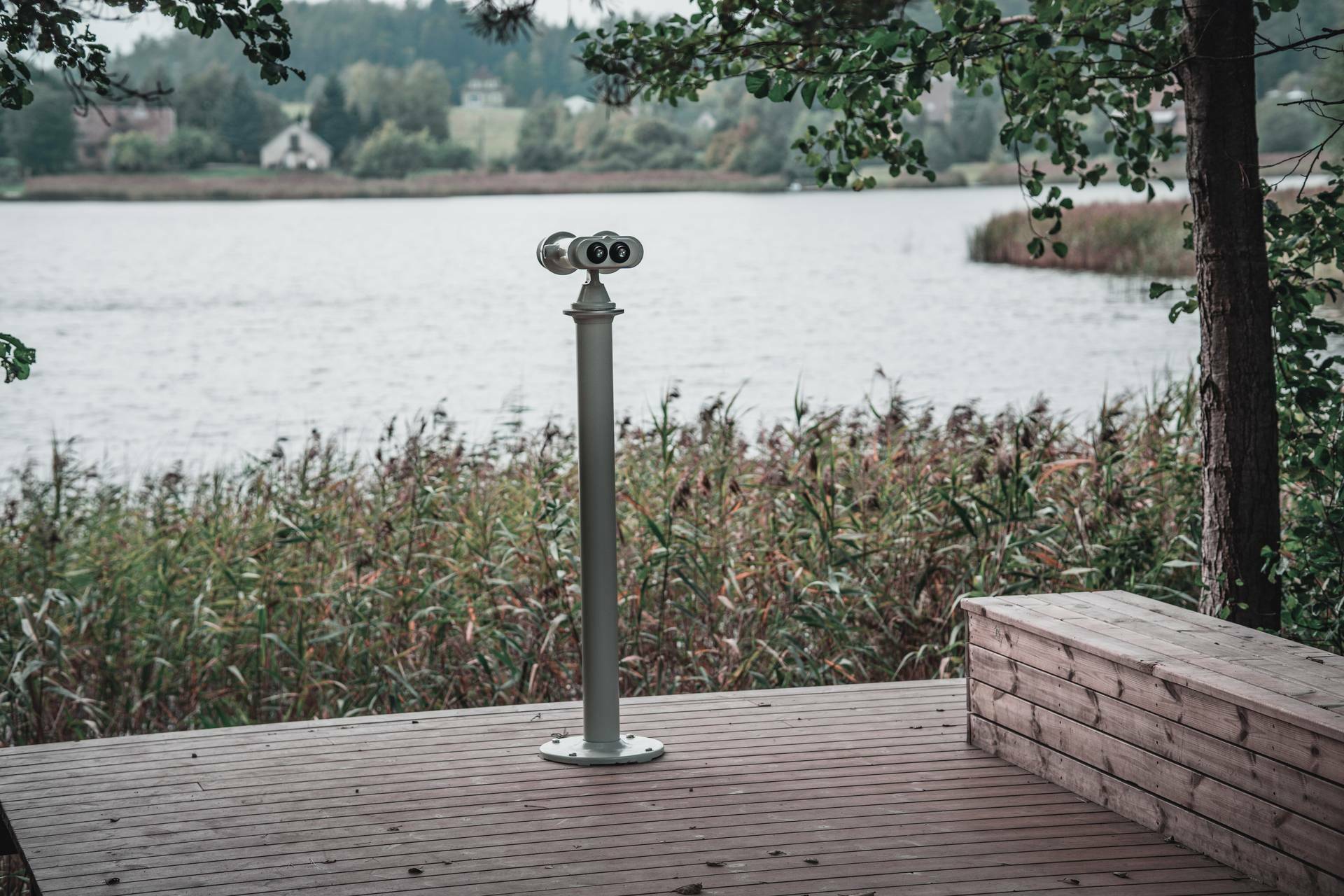
The diversity of the flora is also rich. Information stands describe useful, valuable, and protected plants: narrow-leaved hairy elderberry, red elderberry, earthen sedge, common blackhead, two-leaved honeysuckle, and others. The northern edge of the territory, the shore of the lake, is characterized by steep slopes and diverse vegetation. Black alders grow near the lake, and above there is a beautiful pine forest. The coastal zone has recreation areas with terraces for quiet relaxation, as well as a place from which it is convenient to observe birds with binoculars. Stairs lead to the recreation area on the shore, in order to protect the slope from erosion.
The park also houses the city's old Jewish cemetery, so one of the information stands tells the story of the city of Ignalina, which is inseparable from the merchants and craftsmen of Jewish origin who lived here. In 1931, 1,538 townspeople lived in Ignalina, most of whom were Jews. Unfortunately, only about 20 Jews survived the Holocaust. Some of them joined the partisan units that were active in the Ignalina area after the war.
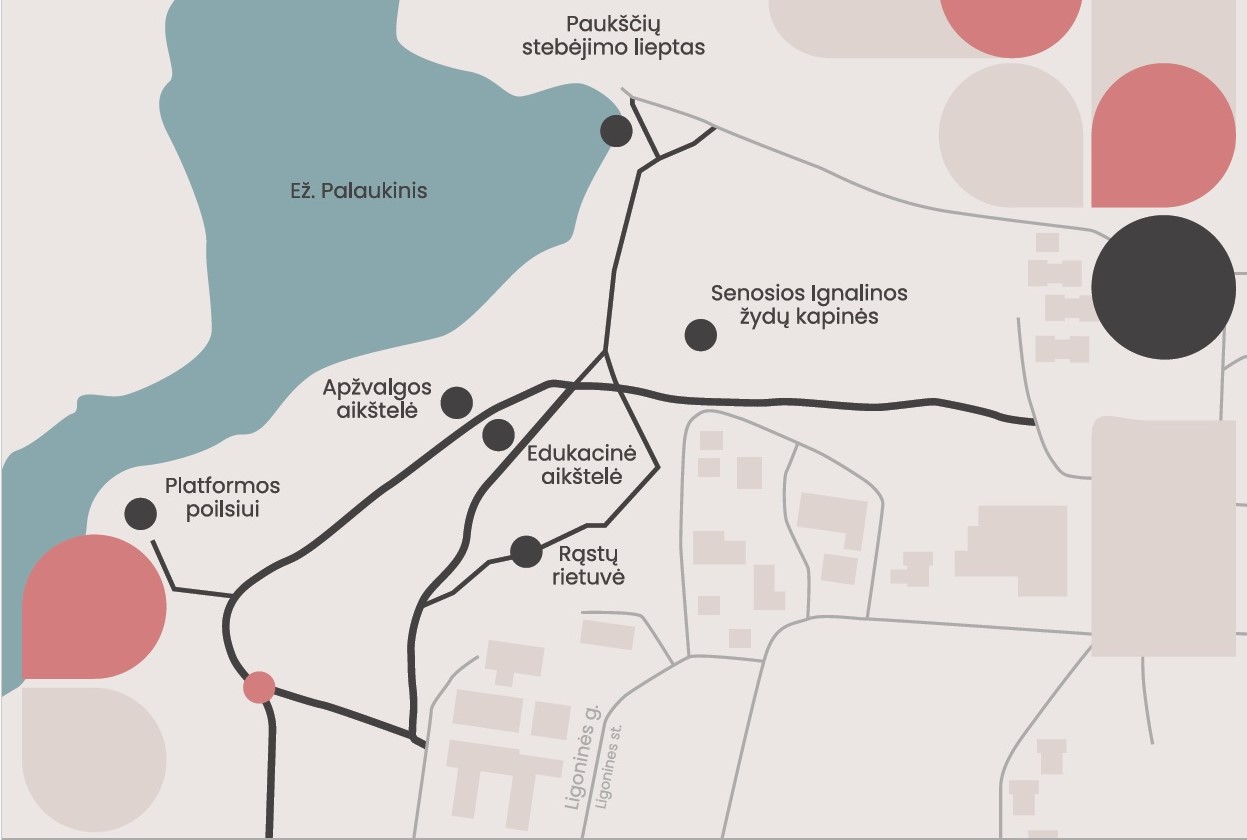
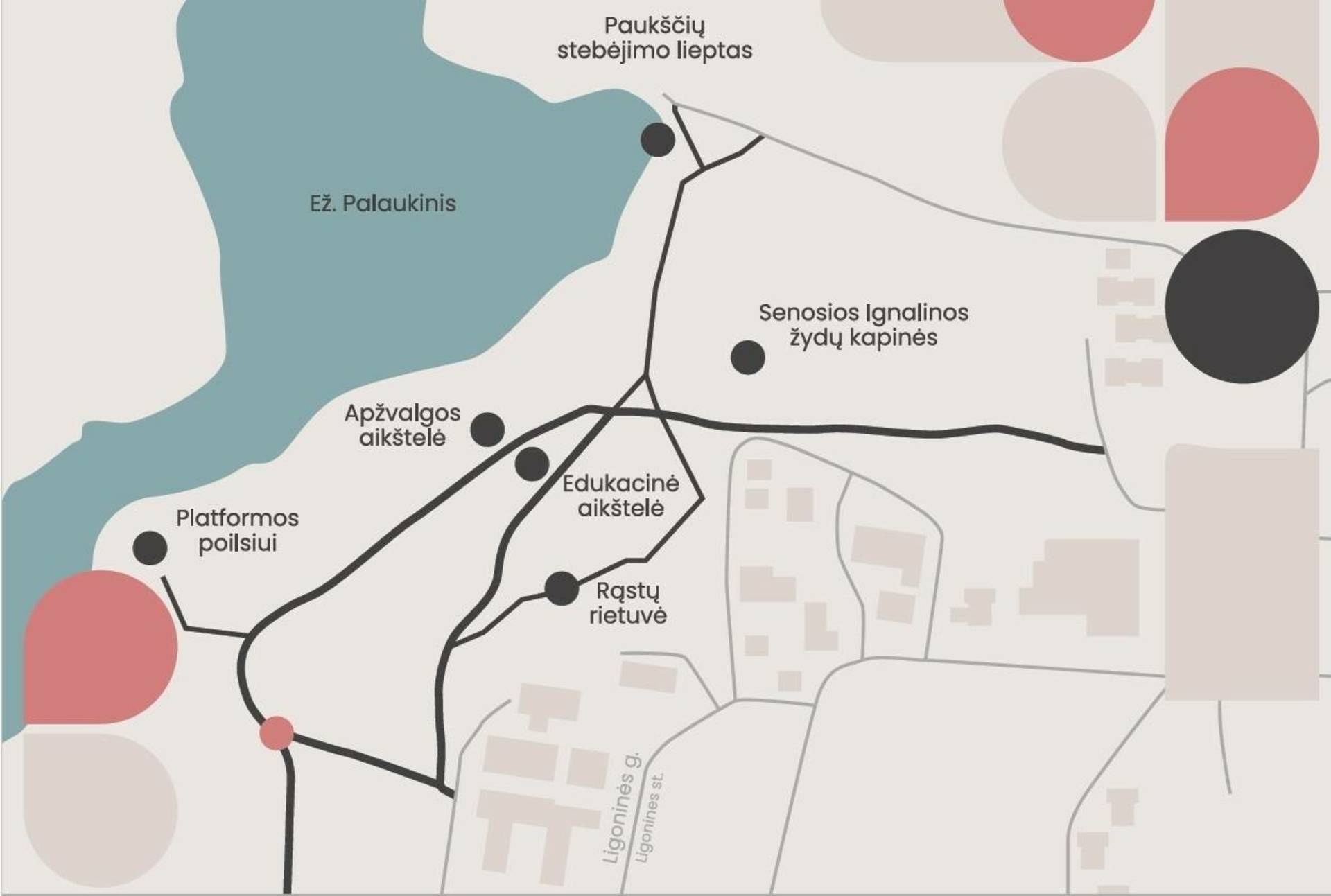
The trail begins and ends in several places: near the Ignalina SPA and kindergarten (GPS: 55.342979, 26.154708), at the bridge separating Lakes Paplovinis and Palaukinis (GPS: 55.345381, 26.150870), and at the Ignalina Hospital (GPS: 55.341672, 26.149271).
Forest Park trail diagram:
Information updated 2025-12-12
Reviews